What to Eat When You're Studying for Exams (Brain Food That Actually Works)
By Shaik Sameeruddin · · 6 min read
Studying is one of the most cognitively expensive things you can do, which is wild because most students fuel it with coffee, chips, and whatever was left in the dining hall at midnight. Your brain runs on glucose, fat, and water. Pretending otherwise is why the third hour of studying feels like swimming in mud.
Here is the honest food plan for long study sessions, broken down by time of day.
The pre-study meal
Eat ninety minutes before you sit down. Not right before. You don't want digestion competing with focus.
Best picks:
- A grain bowl with a protein, vegetables, and a healthy fat - Eggs, avocado, toast - A real sandwich on whole grain bread with turkey and cheese - A bowl of oatmeal with peanut butter and banana
These all release energy slowly. You'll still be sharp at hour two. You won't be hungry until hour four.
Skip:
- A giant pasta bowl alone (food coma in forty minutes) - A pastry and a coffee as lunch (sugar crash by hour two) - Skipping the meal entirely so you "save time" (worst trade in the building)
The during-study snacks
The goal of study snacks isn't entertainment. It's a small steady drip of energy that doesn't pull your attention away from what you're learning.
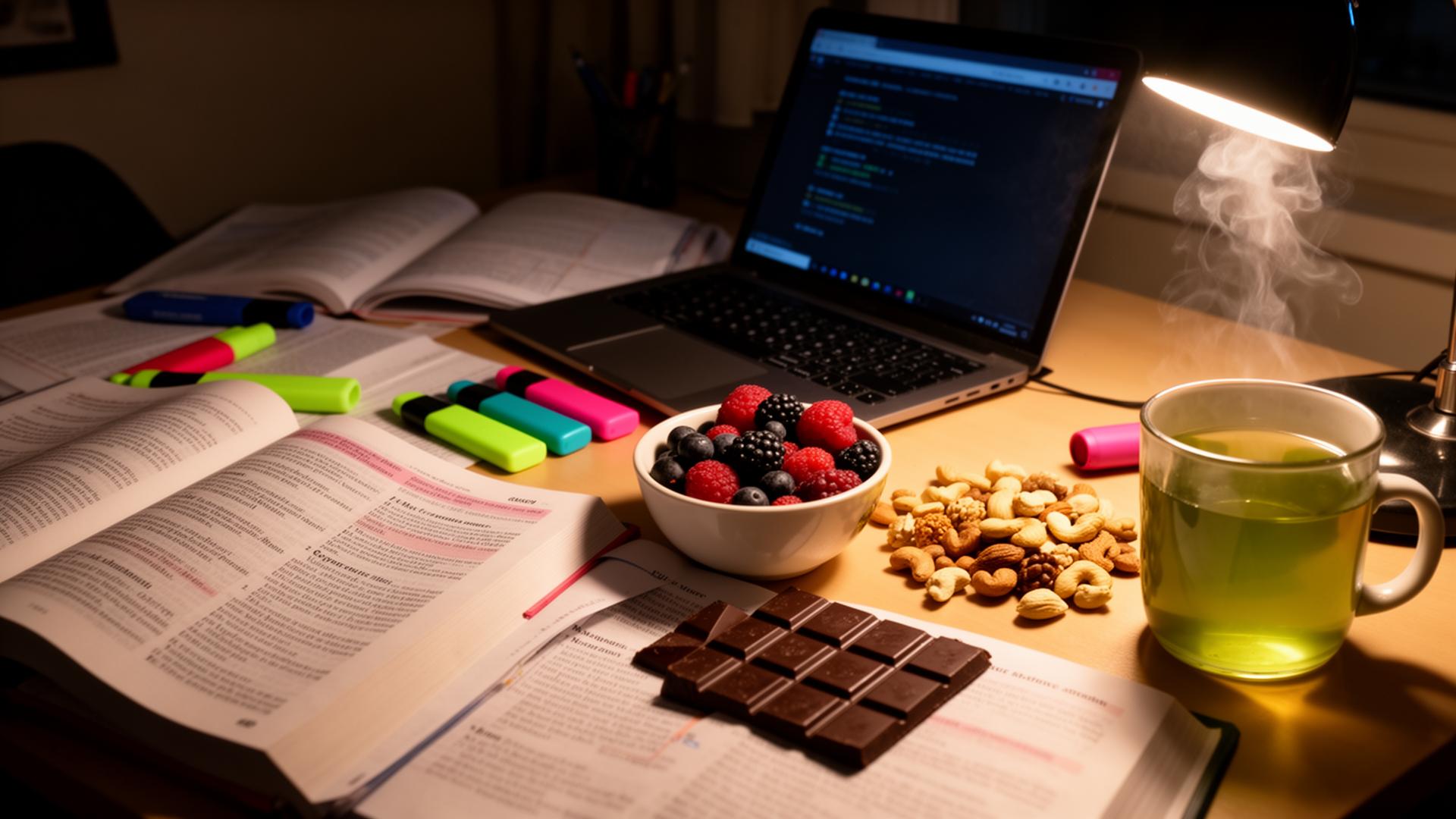
Trail mix with nuts, dark chocolate, dried fruit. A handful every hour. Protein, fat, slow carbs, a tiny dopamine hit from the chocolate.
A small bowl of mixed berries. Fast brain fuel, vitamin C, fiber, no crash.
Greek yogurt with honey. Protein for sustained focus, sugar small enough to not spike you.
Apple slices with peanut butter. The classic. Eats in five minutes. Carries you for an hour.
Dark chocolate squares. Two squares of 70 percent. Real focus boost from a little caffeine and flavanols.
A handful of almonds and a glass of water. When you only have ten seconds.
The hydration thing
Dehydration looks exactly like brain fog. If you've been studying for two hours and you start feeling slow, the first move isn't another coffee. It's a full glass of water. Then wait fifteen minutes. Most "I'm tired" moments are actually "I forgot to drink water."
Aim for one full glass an hour. Tea, water, or sparkling water all count. Soda doesn't.
The caffeine plan
Two coffees, max. One in the morning. One in the early afternoon. After 3pm switch to green tea, which has caffeine but also L-theanine, which keeps you alert without the jittery edge.
After 6pm, no caffeine. You'll still be wired at midnight, then awake at 3am stressed about not sleeping, then exhausted in the actual exam.
The dinner before a big study night
Real dinner. Real protein. Real vegetables. Not pizza. Not a giant burrito. Both will sit on your stomach for three hours and make you sleepy.
Pick:
- Grilled fish or chicken with rice and vegetables - A stir fry with brown rice - A real grain bowl - Soup and a sandwich
Eat by 7pm if possible so it's done digesting by the time you sit back down.
The late night second wind food
Studying past midnight is a personal choice and sometimes a necessary one. The food that supports it is light, warm, and not sweet.
Best picks:
- A small bowl of soup with some noodles - Toast with peanut butter and a banana - A boiled egg and an apple - A small bowl of cereal with milk (the classic for a reason)
Skip:
- A giant snack from the vending machine - A sugary energy drink (you will pay for this between 1 and 3am) - A "second dinner" of fast food
The exam morning meal
Familiar, balanced, protein forward. Today is not the day to try a new breakfast spot.
- Oatmeal with peanut butter and banana - Eggs and toast - A turkey sandwich - Greek yogurt with granola and berries
Drink water. Have one coffee, not three. Go.
The mood angle
The hardest part of long study sessions isn't the studying. It's the constant tiny decisions you have to make around it: what to eat now, what to eat in two hours, what to grab at the cafeteria.
Open BiteByMood when you take a break. Tap how you feel. The mood-first picking handles the decision so you can go back to the actual studying. One less thing to think about means more brain for the thing that actually matters.
Eat real food. Drink water. Sleep before the exam. The rest is just practice.
Keep reading
20 Comfort Foods for a Bad Day (Ranked by How Much They Help)
Some food fixes the mood. Other food just fills the hole. Here's a ranked list of 20 comfort meals based on real bad-day testing.
What to Eat When You're Hungover (a Field Guide by Mood)
Hungover isn't one mood. It's four. Here's what to eat depending on which version of the hangover you're trapped in.
12 Lazy Dinner Ideas Under 15 Minutes (No Real Cooking)
Twelve dinners you can have on the table in 15 minutes no real cooking required. Includes a no-cook tier for the truly done.